
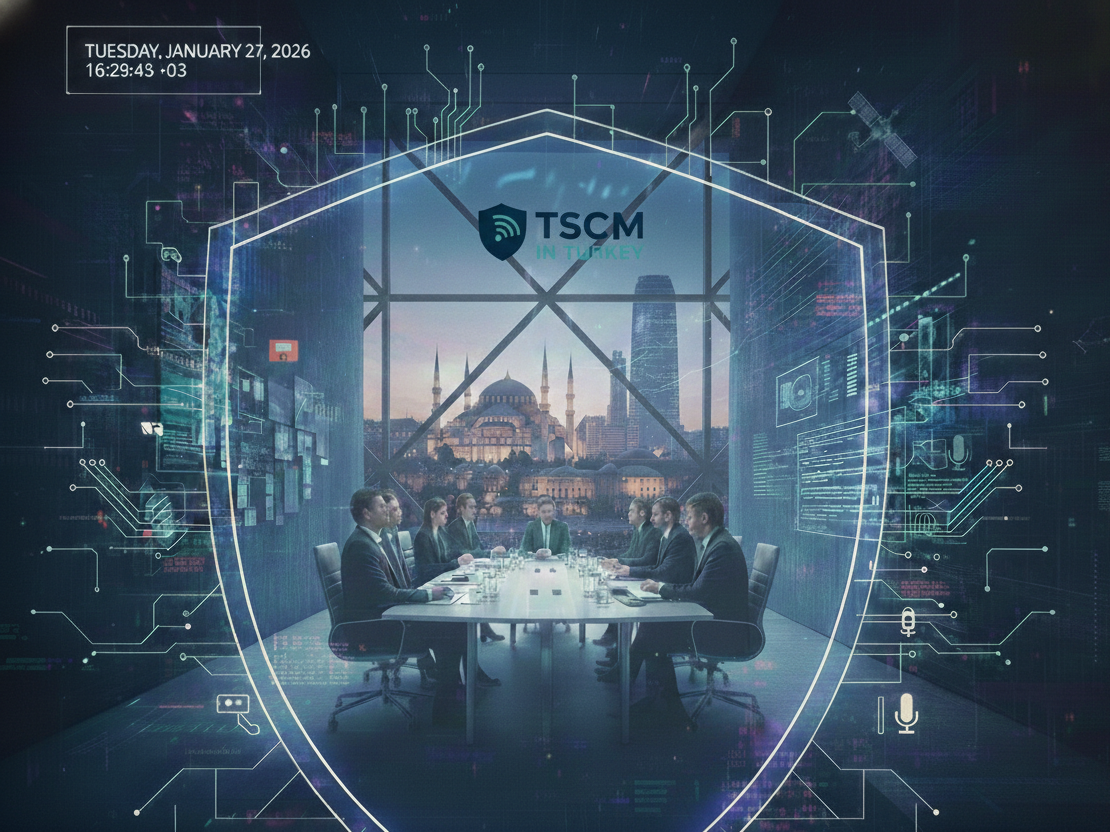
As executives travel internationally, hotels and temporary meeting environments have become some of the most exposed locations for technical surveillance activities.
Advances in miniature electronics, wireless technologies and covert installation techniques have significantly increased the risk of unauthorized monitoring, data leakage and strategic intelligence collection.
Why Hotels and Meeting Rooms Are High-Risk Environments
Hotels and external meeting venues are designed for convenience and rapid turnover, not for executive-level security.
Shared infrastructure, frequent access by third parties and limited control over technical installations make these environments particularly attractive for surveillance operations.
Common Technical Surveillance Threats
Modern surveillance threats extend far beyond traditional listening devices.
Common risks include:
- Hidden audio and video recording devices
- Compromised Wi-Fi and network infrastructure
- Rogue access points and Bluetooth-based monitoring
- Power-line and USB-based data interception
- Temporary installations removed after meetings
The Impact on Executive Decision-Making
Exposure to technical surveillance does not only result in information loss.
It can directly affect executive decision-making, negotiation outcomes and strategic planning by creating uncertainty and compromising confidentiality.
Why TSCM Is a Critical Layer of Executive Security
Technical Surveillance Countermeasures (TSCM) provide systematic detection and risk mitigation against covert monitoring activities.
When integrated with cyber, information and physical security measures, TSCM enables executives to operate with confidence in unfamiliar or high-risk environments.
An Integrated Security Approach
Effective protection cannot rely on isolated security actions.
A coordinated approach combining TSCM, cyber and information security, and executive protection allows organizations to identify vulnerabilities, reduce exposure and maintain operational integrity.
As surveillance techniques continue to evolve, proactive security measures are no longer optional for executives operating globally.
Understanding and addressing technical surveillance risks is a fundamental requirement for protecting information, reputation and strategic advantage.